 Save to Pinterest
 The first hint of spring in my kitchen always arrives with a bundle of asparagus and the cheerful snap of fresh peas hitting the cutting board. I remember one morning, sunlight spilling across the countertop, when the spinach leaves seemed extra vibrant and I decided to whip up a frittata with whatever greens I had on hand. There's something quietly satisfying about tossing together familiar flavors and suddenly having your brunch feel just a bit more special. Even the sizzle of butter in the skillet felt celebratory, marking the change of seasons with every stir. The gentle tang of goat cheese made it all feel fresh and a little indulgent, as if spring insisted I slow down and savor every bite.
I once made this frittata for brunch after a morning walk with friends, the kind where conversations tumble out over steaming mugs of coffee. Watching everyone lean in over the table, I caught a quiet smile from someone who claimed to “never like eggs much,” but went back for seconds anyway. Sharing the dish seemed to slow the morning, encouraging laughter in between forkfuls, and the goat cheese transformed ordinary eggs into something so much more.
Ingredients
- Asparagus: Use crisp, tender asparagus and trim away woody ends for the best snap and flavor; a quick sauté makes them sweet and bright.
- Peas: Fresh peas are lovely, but frozen work well in a pinch; just add them straight to the pan and let their color pop.
- Baby spinach: Roughly chopped spinach helps it blend in and wilt evenly—don’t be afraid to pile it high, it shrinks quickly.
- Spring onions: Thin slices add a gentle crunch and a lift to the herbs; make sure to wash them well to avoid any grit.
- Eggs: Room temperature eggs whisk more smoothly and give the frittata a lighter texture.
- Milk or cream: A splash of milk or cream softens the eggs and makes them puff—whole cream brings extra richness if you’re feeling indulgent.
- Goat cheese: Crumble it generously so every bite gets a creamy, tangy note; fresh goat cheese is easiest to sprinkle.
- Unsalted butter: Melt slowly to avoid browning, and swirl to coat the pan so nothing sticks.
- Fresh chives and dill or parsley: Chop herbs just before adding so the fragrance wakes up in the eggs; parsley is brighter, dill is soothing.
- Salt and pepper: Season the eggs well—taste before baking so you’re confident in the balance.
Tired of Takeout? 🥡
Get 10 meals you can make faster than delivery arrives. Seriously.
One email. No spam. Unsubscribe anytime.
Instructions
- Set the Scene:
- Preheat the oven to 375°F (190°C) so it’s ready just as your eggs begin to firm up on the stove.
- Brighten the Veggies:
- In an oven-safe skillet, melt butter on medium; listen for that gentle sizzle as asparagus goes in, stirring for two minutes until it turns a deeper green. Add peas and spring onions—everything should be vibrant and just tender. Stir in spinach last, letting it wilt and mingle with the spring veg flavors.
- Mix the Eggs:
- In a bowl, whisk eggs with milk or cream, the fresh herbs, salt, and pepper; the mixture should be smooth and light. Aim for tiny bubbles on top and flecks of green herbs throughout.
- Pour and Set:
- Slowly pour the egg mixture over the veggies, swirling the pan gently. Let it cook undisturbed for 3–4 minutes, until the edges just begin to set while the center stays invitingly soft.
- Goat Cheese Sprinkle:
- Scatter the goat cheese over the top so every slice catches some—watch it nestle into the eggs before popping the skillet in the oven.
- Oven Magic:
- Bake for 10–12 minutes, checking for a gentle puff and a barely set center. Remove and let cool for five minutes, resisting the urge to slice right away so flavors settle.
- Serve:
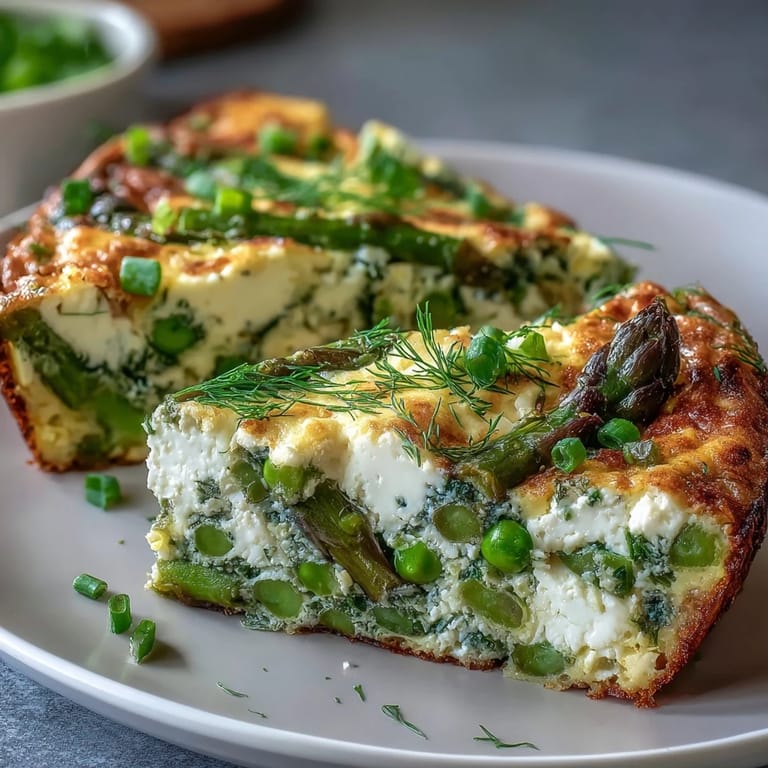
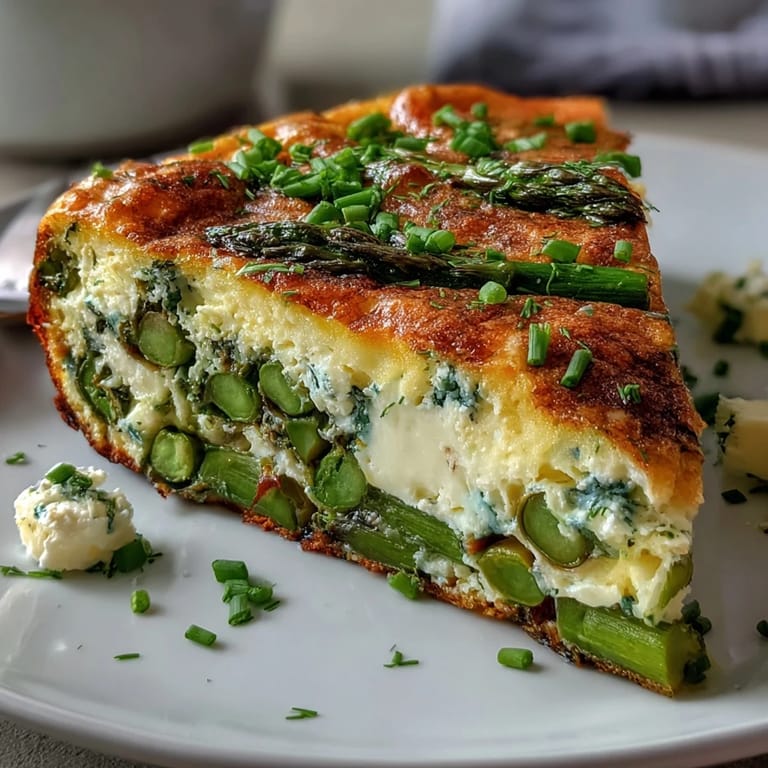
- Carefully slice and lift the frittata, serving warm or at room temperature—each wedge shows off its layers of spring on the plate.
 Save to Pinterest
 There was a moment when serving this at a spring family gathering, even the youngest at the table leaned in for their own slice, asking what made it taste “so soft and green.” The laughter, warm afternoon light, and empty pan by the end made me realize this frittata wasn’t just part of the meal—it was part of the memory.
A Brunch Worth Sharing
This dish always invites conversation around the table—there’s no rush, just forks clinking and glasses raised. Making it feels peaceful even when mornings are busy, and the leftovers are just as good for a late lunch. Pairing with a fresh salad or crusty bread gives extra texture and turns it into a feast.
Vegetable Variations and Swaps
Don’t be afraid to switch up the veg—sometimes zucchini, fresh fava beans, or even leftover cooked greens fit right in. Playing with different herbs gives you new flavor dimensions, and the frittata is a forgiving canvas for whatever’s in season. I’ve found that even a splash of lemon zest brightens things if you want a citrus twist.
Making it Your Own: Tips for Success
No matter how many times you make this, every frittata is slightly different—embrace the quirks and little imperfections. Allow the eggs to barely puff, and don’t stress over a few golden edges. A last minute addition of herbs brings life to the flavor.
- Let the frittata rest five minutes before slicing so it holds together.
- If you substitute cheeses, go for something soft and crumbly for the same indulgent texture.
- Don’t forget: seasonings taste more pronounced after baking, so go easy with salt at first.
 Save to Pinterest
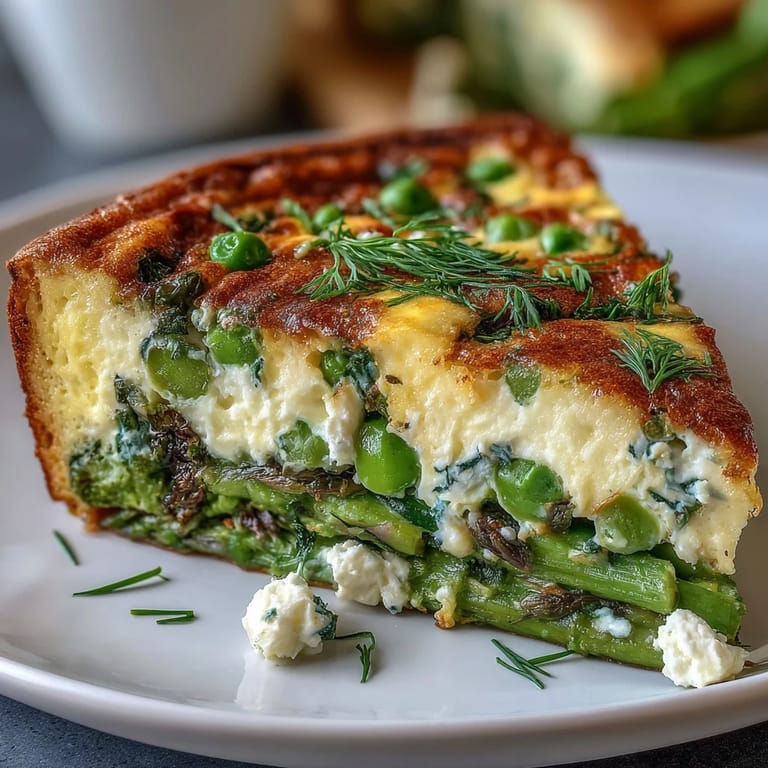
 Spring’s promise feels real every time I serve this frittata—never complicated, always a comfort. Whether it’s brunch with friends or lunch for one, it brings a fresh note to any table.
Recipe Q&A
- → What vegetables work best for this frittata?
Asparagus, peas, baby spinach, and spring onions shine in this dish. You can add zucchini or fava beans for extra spring flavor.
- → Can I make this dairy-free?
Use plant-based milk instead of cream and substitute vegan cheese for goat cheese, or omit cheese entirely.
- → What tools are necessary?
An oven-safe nonstick skillet, mixing bowl, whisk, knife, cutting board, and spatula ensure easy preparation.
- → How do I know when it's cooked?
The center should be just set and puffy. Let cool briefly before slicing for best texture.
- → What can I serve alongside it?
Pair with a green salad, crusty bread, and beverages like sparkling water with lemon or Sauvignon Blanc.
- → Is this dish gluten-free?
Yes, it's naturally gluten-free. Always check labels on cheese or butter for hidden allergens.