 Save to Pinterest
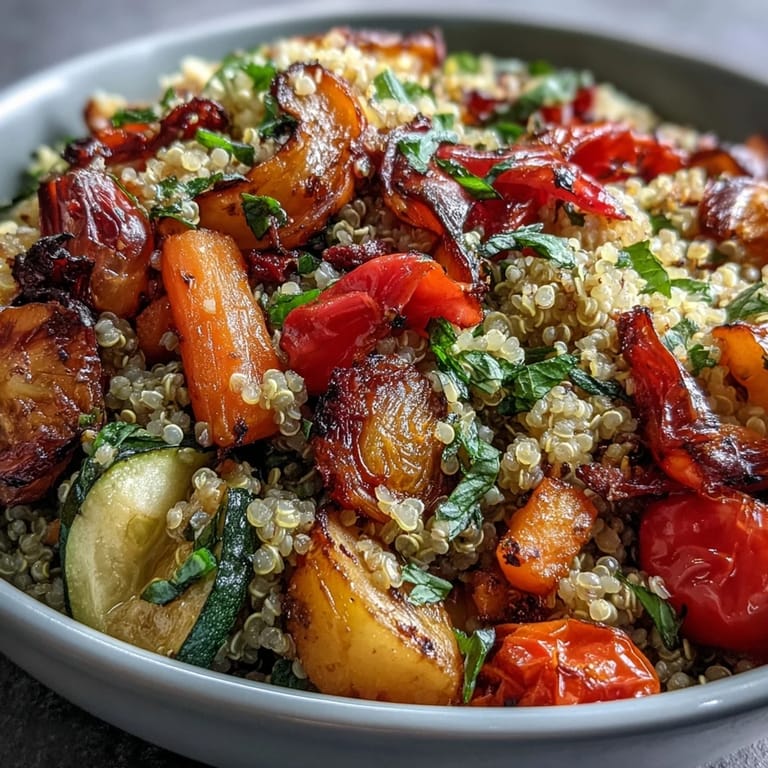
 There's something about the sound of vegetables hitting a hot baking sheet that signals the start of something good. I discovered this quinoa pilaf on an ordinary Tuesday when I was tired of the same rotation and decided to throw together whatever colorful produce was hanging around my kitchen. What started as an experiment in reducing food waste turned into a dish I now make constantly because it's genuinely exciting to eat, and somehow manages to feel both light and satisfying.
My partner once complained that grain bowls felt boring, so I made this on a Friday night and watched their expression change with the first bite. The roasted vegetables had caramelized into these almost crispy-edged pieces, the quinoa was fluffy but held together with the spices, and somehow it felt restaurant-quality without any fuss. They've asked me to make it every week since, which is the highest compliment my kitchen has ever received.
Ingredients
- Quinoa, rinsed: Rinsing removes the bitter coating and makes such a noticeable difference in taste that it's worth the extra thirty seconds.
- Vegetable broth or water: Broth adds subtle flavor, but water works perfectly fine if that's what you have.
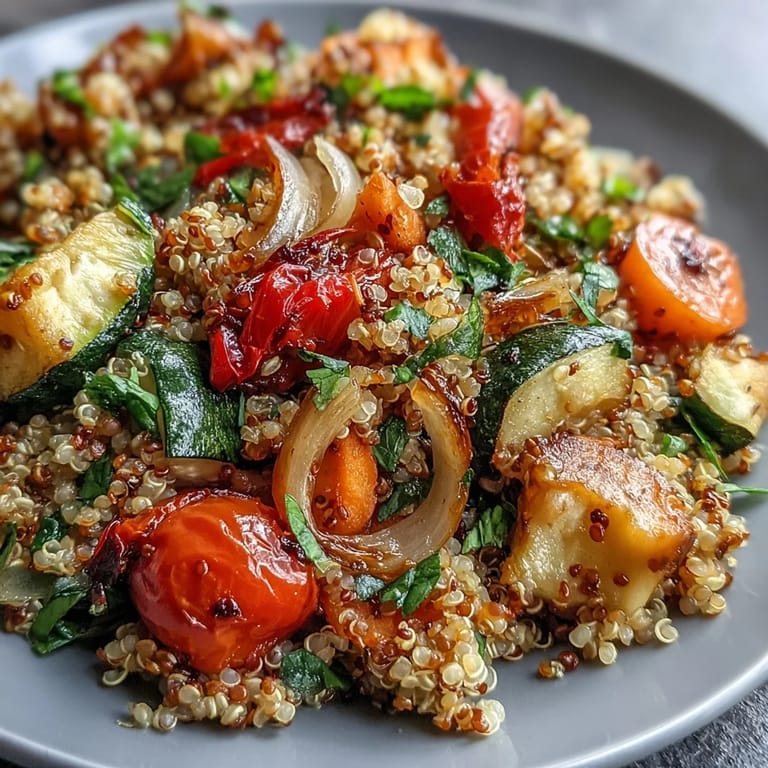
- Red bell pepper, zucchini, carrot, red onion: Choose vegetables that feel firm and look vibrant, and don't stress about exact sizes since roasting mellows everything together.
- Cherry tomatoes: Halving them prevents them from rolling around and allows their juices to caramelize into the pan.
- Olive oil: Good quality makes a difference here since it's a major flavor component, not just cooking medium.
- Garlic, cumin, thyme, smoked paprika: These aromatics create warmth without being spicy, letting the vegetables stay the star of the show.
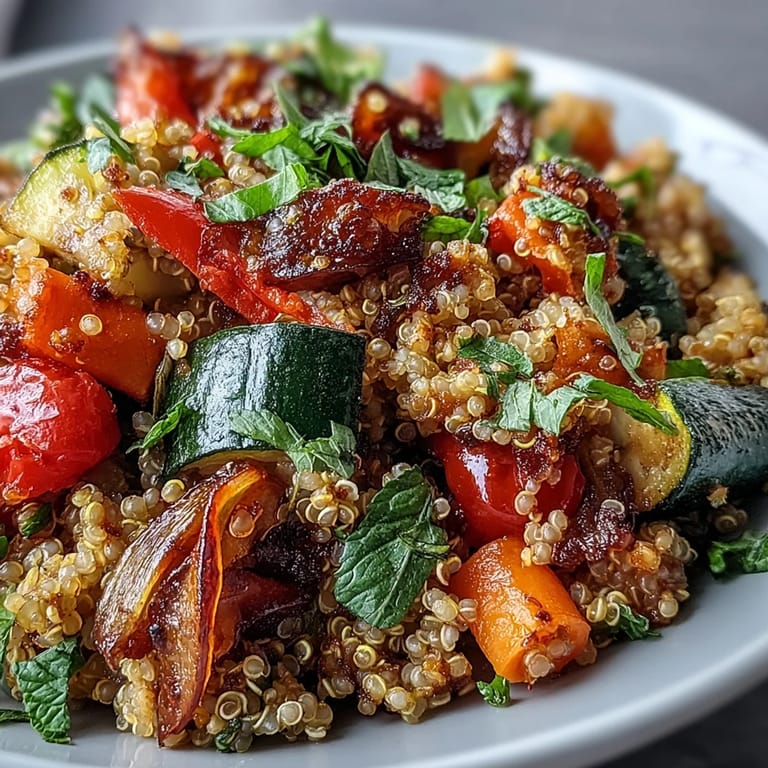
- Fresh parsley and mint: Mint is optional but transforms the dish from nice to genuinely crave-worthy with its brightness.
- Lemon juice: The final squeeze ties everything together and prevents the pilaf from tasting flat or one-note.
Tired of Takeout? 🥡
Get 10 meals you can make faster than delivery arrives. Seriously.
One email. No spam. Unsubscribe anytime.
Instructions
- Heat your oven and prep vegetables:
- Get the oven to 425°F and while it preheats, dice your vegetables into similar-sized pieces so they roast evenly. This is the one moment where size actually matters.
- Roast with confidence:
- Toss everything with olive oil and salt on a baking sheet, then roast for 20 to 25 minutes, stirring halfway through so nothing sticks. You'll know they're done when the edges start turning golden and caramelized.
- Cook quinoa simultaneously:
- Combine rinsed quinoa with broth in a saucepan, bring to a boil, then cover and reduce heat to low for 15 minutes. Once the liquid disappears, let it sit covered for 5 minutes, then fluff with a fork so each grain stays separate and light.
- Toast the spices:
- Heat a drizzle of oil in a large skillet over medium heat, add garlic for about 30 seconds until fragrant, then stir in cumin, thyme, and smoked paprika. This step wakes up the spices so they actually taste like something.
- Bring it all together:
- Add the cooked quinoa and roasted vegetables to the skillet with the spices, tossing gently until everything is warm and mixed through. It should come together like a warm hug in a bowl.
- Finish with brightness:
- Remove from heat, scatter parsley and mint over top, squeeze the lemon juice across everything, then toss well. Taste and adjust salt and pepper because you know your seasoning preferences better than anyone.
 Save to Pinterest
 Last summer I brought this to a potluck where I didn't know many people, and somehow it became the conversation starter. Someone asked for the recipe, then someone else did, and suddenly I was explaining how to roast vegetables to three different people while holding a paper plate. It felt ridiculous and wonderful, the kind of moment where you realize a simple bowl of food can actually create connection.
Vegetable Swaps and Seasonal Thinking
The beauty of this pilaf is that it genuinely works with whatever vegetables you have available. In summer I lean into zucchini and cherry tomatoes, but come fall I swap in butternut squash cubes and Brussels sprouts, which roast into crispy-edged perfection. Winter is the season for root vegetables like parsnips and beets, which turn almost sweet as they caramelize. The core formula stays the same, but the pilaf tastes like the actual season you're in, which somehow makes eating feel more grounded.
Protein Additions Without Losing the Plot
This dish is already vegetarian and protein-respectful with the quinoa, but sometimes you want it to feel more substantial. A can of chickpeas stirred in at the end adds earthiness without changing the flavor profile, or you can fold in some crumbled feta if dairy is welcome at your table. I've also served this alongside grilled chicken or fish for people who wanted to round out their plate, and it never feels like it's competing or playing second fiddle.
Storage and Making It Work for Busy Weeks
This pilaf is actually one of those rare dishes that gets better overnight as the flavors settle together, which means you can make it on Sunday and eat it all week without any guilt. Store it in an airtight container in the refrigerator for up to four days, and eat it cold straight from the fridge or gently warmed in a skillet if you want it hot again. It's the kind of recipe that solves the eternal lunch problem without requiring any reheating drama or tasting like cafeteria food.
- Make a double batch on Sunday and you'll have lunch ready before the week even starts.
- Cold from the fridge is actually better than hot because the lemon flavor stays brighter and more alive.
- If you're bringing it somewhere, pack the fresh herbs and lemon juice separately and add them right before serving so everything stays vibrant.
 Save to Pinterest
 This pilaf taught me that simple food done intentionally tastes better than complicated recipes made without paying attention. Every time I make it, I'm reminded that the best dishes are the ones that make you want to eat another bowl.
Recipe Q&A
- → Can I make this quinoa pilaf ahead of time?
Yes, this dish reheats beautifully. Store in an airtight container in the refrigerator for up to 4 days. Reheat gently in a skillet with a splash of water or broth to refresh the texture.
- → What vegetables work best in this pilaf?
The recipe uses seasonal vegetables like bell peppers, zucchini, carrots, and tomatoes, but you can substitute whatever is available. Eggplant, squash, broccoli, or green beans all roast well and complement the quinoa base.
- → How do I prevent quinoa from becoming mushy?
Rinse quinoa thoroughly before cooking to remove bitter saponins. Use the correct 1:2 ratio of quinoa to liquid, and let it stand covered for 5 minutes after cooking. Fluff gently with a fork rather than stirring vigorously.
- → Can I add protein to make it more filling?
Absolutely. Stir in drained chickpeas during the final toss, or top with crumbled feta, grilled chicken, or shrimp. The pilaf also pairs well alongside fish or tofu for a complete meal.
- → Is this dish suitable for meal prep?
Excellent choice for meal prep. Portion into containers and refrigerate. The flavors actually improve after a day as the herbs and spices meld. Keep fresh herbs and add just before serving for best texture.