 Save to Pinterest
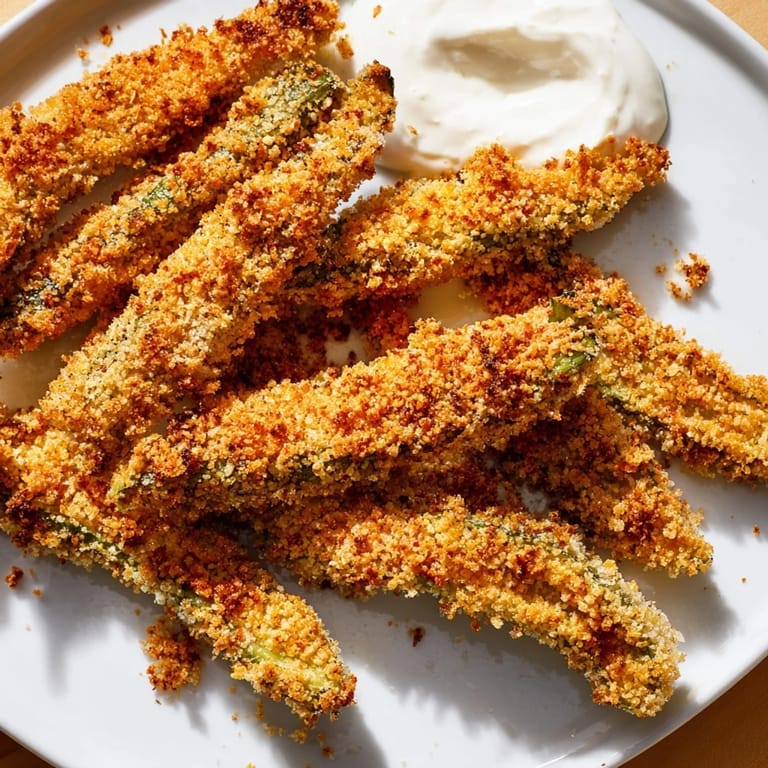
 The first time I made fried pickles, I was standing in my friend's kitchen on a lazy Sunday afternoon, staring at a jar of dill pickles and wondering if they'd actually work when deep-fried. Something about the combination seemed too simple to be good, but the moment those golden, crispy spears emerged from the oil and I bit into one—tart, crunchy, with just the right amount of seasoning—I understood why this became a staple at every gathering I've attended since. There's something magical about taking something already tangy and transforming it into something entirely different.
I remember bringing a batch of these to a potluck where I barely knew anyone, and somehow they became the reason people stayed talking in the kitchen instead of scattering to the living room. One person came back for thirds, another asked if I could teach her the trick, and suddenly I was the person known for fried pickles instead of whatever else I'd been planning to bring. Food has this quiet way of breaking the ice when words won't.
Ingredients
- Dill pickle spears: Use the large ones if you can find them—they give you more crispy surface area to enjoy, and patting them completely dry is the secret that keeps the breading from sliding off.
- All-purpose flour: This creates the first seal that helps everything stick together later.
- Eggs and milk: This mixture is your glue; don't skip the milk because it thins the eggs just enough to coat evenly without getting clumpy.
- Panko breadcrumbs: These stay crunchier longer than regular breadcrumbs, and if you can find them, they're worth the small extra effort.
- Garlic powder and paprika: These are doing the flavor work; don't reduce them or you'll end up with bland fried pickles, which defeats the entire purpose.
- Cayenne pepper: Optional but honestly necessary if you like a whisper of heat threading through each bite.
- Vegetable oil: Use something neutral with a high smoke point—vegetable or canola work perfectly.
- Ranch dressing: The cool contrast is non-negotiable; it balances the richness and heat beautifully.
Tired of Takeout? 🥡
Get 10 meals you can make faster than delivery arrives. Seriously.
One email. No spam. Unsubscribe anytime.
Instructions
- Heat your oil properly:
- Get that oil to exactly 350°F—use a thermometer and wait for it to stabilize. Too cool and they'll be greasy; too hot and the outside burns before the inside gets crispy.
- Build your breading station:
- Line up three shallow bowls with flour, egg mixture, and seasoned breadcrumbs in order. Having everything ready means you move fast and keep the pickles from getting soggy.
- Bread each spear carefully:
- Coat with flour first, shaking off the excess, then dip in egg so it's fully covered, then press gently into the breadcrumbs—that gentle pressure makes them stick like they're meant to be there. Some people double-coat for extra crunch, and honestly, they're onto something.
- Fry in batches:
- Don't crowd the pan; a few pickles at a time means they cook evenly and the oil temperature stays steady. Turn them gently with a slotted spoon so the coating doesn't crack.
- Drain and serve immediately:
- Paper towels are your friend here—they pull away that excess oil and keep everything crispy. Serve them still warm with ranch waiting on the side.
 Save to Pinterest
 There's a moment that happens every time I make these when someone who's never had fried pickles takes their first bite and their eyes go wide with surprise. It's become one of my favorite kitchen moments—that split second when someone's assumption about what they're eating gets completely rewritten. That's the real magic here.
The Crunch Factor
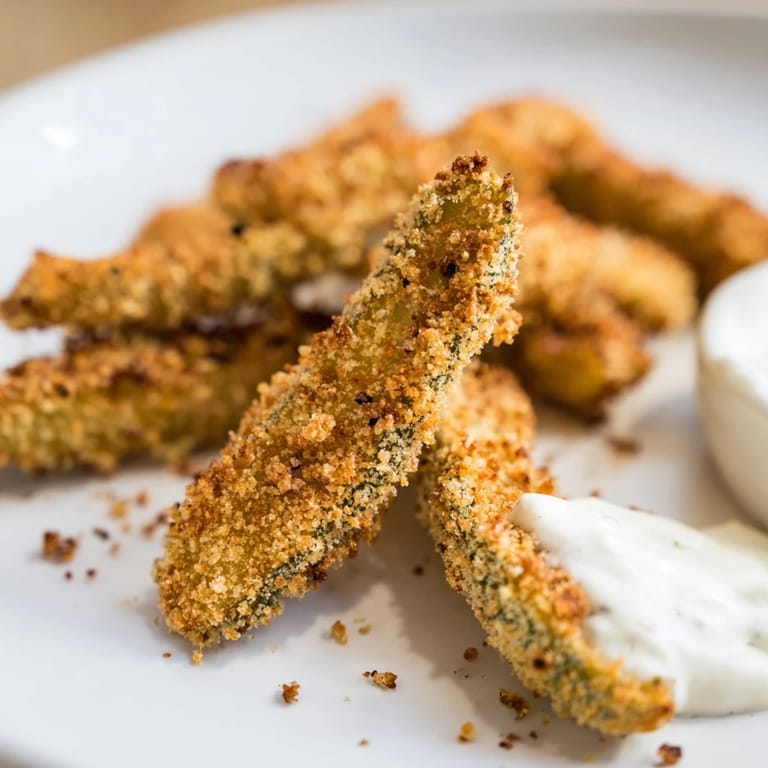
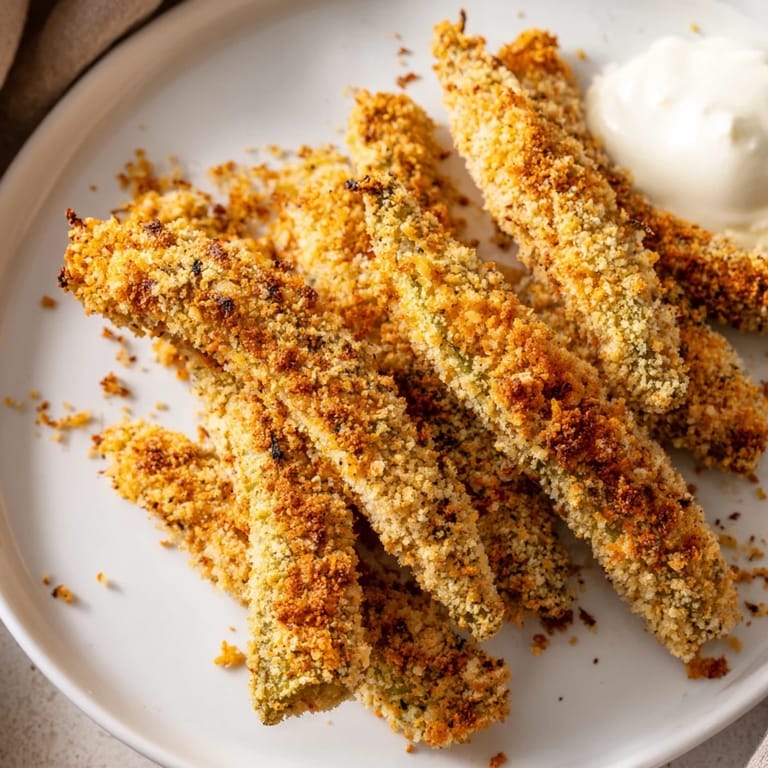
Everything about this recipe lives and dies by texture. The moment those pickles hit the hot oil, the moisture inside starts creating steam while the outside turns golden and crispy—it's that contrast that makes people come back for more. Some nights I'll use panko because I want extra-loud crunch, and other times regular breadcrumbs work fine if that's what I have. The seasoning blend (garlic powder, paprika, a hint of cayenne) should taste like a whisper when you eat it straight from the bowl, but it becomes bold and confident once it's toasted on the outside of the pickle.
Dipping Sauce Strategy
Ranch dressing isn't just a default here—it's a calculated choice. The cool, creamy, slightly tangy sauce creates a perfect contrast with the hot, crispy pickle and the salty breading. I've tried blue cheese (great for a bolder palate), spicy ranch (which amplifies the cayenne), and even sriracha mixed into mayo, and they all work, but there's something about classic ranch that just feels right. The coldness of it against the heat of the just-fried pickle is almost as important as the flavor itself.
Timing and Temperature Secrets
The 2–3 minute fry time is where patience matters. Too short and the outside is crispy but the breading hasn't fully sealed. Too long and the inside starts leaking out around the edges while the coating gets dark brown. I always set a mental timer and stay nearby because oil temperature naturally drops when you add cold pickles, and it takes a moment to climb back up. Once you've made these a couple of times, you'll develop a feel for it—your eyes will know when that golden color is right, and your instincts will tell you when to turn them.
- Use a slotted spoon or spider strainer to keep your hands safe and keep the coating intact.
- If you're making a big batch, keep the finished ones on a warm plate in a low oven so they stay crispy while you fry the rest.
- Serve these the moment they're cool enough to eat—they're honestly better warm, and they only get worse as they sit.
 Save to Pinterest
 Fried pickles taught me that sometimes the best appetizers are the ones nobody expects to work until they taste one. These live in that perfect space between snack and starter, between casual and impressive.
Recipe Q&A
- → What oil is best for frying pickles?
Vegetable oil with a high smoke point works well for deep frying, ensuring even cooking and crispiness.
- → How do I get the breading to stick well?
Coat pickles first in flour, then dip in egg wash, and finally press them into seasoned breadcrumbs to ensure a firm, even coating.
- → Can I make these gluten-free?
Substitute all-purpose flour and regular breadcrumbs with gluten-free alternatives to maintain the crispy texture.
- → What spices enhance the breading flavor?
Garlic powder, paprika, salt, black pepper, and a touch of cayenne pepper add subtle heat and depth.
- → How long should I fry the pickle spears?
Fry for about 2-3 minutes until golden brown and crispy, turning occasionally for even cooking.