 Save to Pinterest
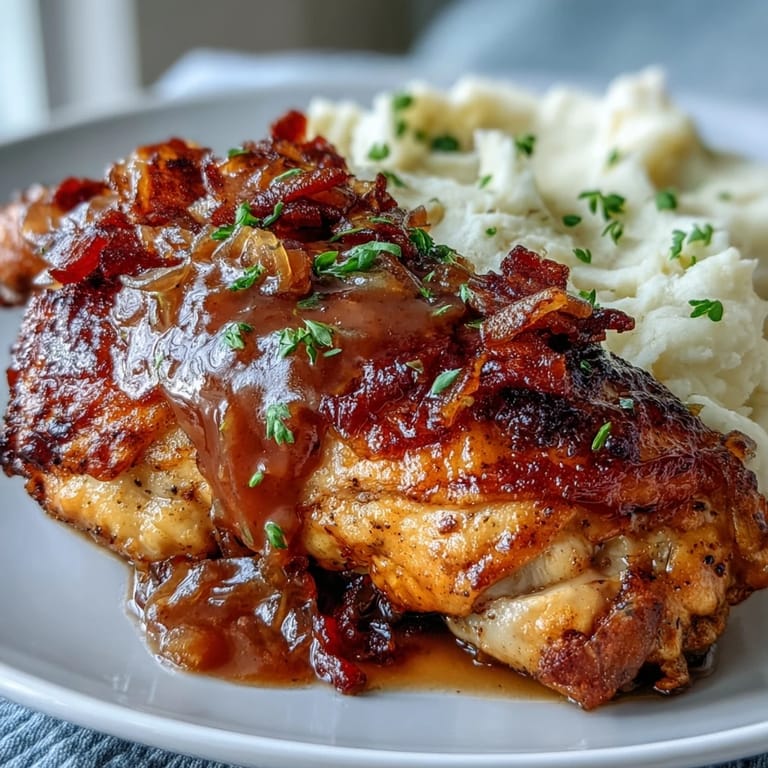
 My grandmother's kitchen on Sunday afternoons smelled like this dish—golden chicken hitting hot oil, onions caramelizing into something almost sweet, and that gravy thickening into liquid gold. She never measured anything, just knew by feel when the chicken was golden enough, when the onions had surrendered completely to the heat. Years later, I finally asked her to teach me properly, and what emerged was this recipe: a Southern comfort classic that tastes like it took hours but comes together in just over an hour.
I made this for my partner on a cold Tuesday night when nothing felt right, and by the time we sat down with steaming plates, something had shifted—not just in the kitchen, but in the whole evening. There's something about smothered chicken that transforms a ordinary dinner into something that feels like care.
Ingredients
- Bone-in, skin-on chicken thighs and drumsticks (8 pieces total): These cuts have enough fat and connective tissue to stay moist through both frying and simmering, which is why they're better than breasts for this dish—boneless chicken will give you something dry and forgettable.
- Salt, black pepper, paprika, garlic powder, onion powder: This seasoning blend goes on the chicken before breading, creating layers of flavor that don't all come from the gravy—taste the chicken on its own and you'll understand why.
- All-purpose flour for breading: Use the same flour for dredging and gravy to keep things simple and ensure consistency.
- Vegetable oil: You need a neutral oil that can handle the heat without burning; don't use olive oil here.
- Large yellow onions, thinly sliced: Yellow onions caramelize beautifully and turn sweet and deep, which is the whole personality of this gravy—don't skip the slicing step, as thin onions cook faster and distribute more evenly.
- All-purpose flour for the gravy: This thickens the sauce and should be cooked in the fat to remove the raw flour taste before you add liquid.
- Low-sodium chicken broth: Homemade is always better if you have it, but quality store-bought works fine—avoid the super salty kind.
- Dried thyme, paprika, salt, black pepper, unsalted butter: These finish the gravy with complexity and richness.
Tired of Takeout? 🥡
Get 10 meals you can make faster than delivery arrives. Seriously.
One email. No spam. Unsubscribe anytime.
Instructions
- Prepare and season the chicken:
- Pat the chicken completely dry with paper towels—any moisture will prevent proper browning. Season every surface generously with salt, pepper, paprika, garlic powder, and onion powder, getting into the crevices between thighs and drumsticks.
- Set up your breading station:
- Mix flour, salt, and pepper in a shallow bowl. Work with one piece at a time, dredging thoroughly and shaking off excess flour—you want a light, even coat, not a thick crust that falls off in the pan.
- Fry the chicken until golden:
- Heat oil over medium heat until it shimmers, then lay chicken skin-side down first. Let it sizzle and don't move it around—you're listening for a steady, satisfied sizzle sound that means the Maillard reaction is happening. After 6-8 minutes, flip and cook the other side until golden brown all over, then transfer to a plate (the chicken won't be fully cooked yet, and that's exactly right).
- Build the gravy base with caramelized onions:
- Pour off all but 2 tablespoons of the cooking oil into the same skillet. Add your thinly sliced onions and cook slowly over medium heat, stirring occasionally, until they're golden, soft, and starting to stick slightly to the bottom of the pan—this takes about 8-10 minutes and is worth every second of patience. This is when you'll smell that deep, sweet onion perfume that makes the whole dish worth making.
- Make a roux with the onions:
- Sprinkle your reserved flour over the soft onions and stir constantly for 1-2 minutes until the flour loses its raw smell and turns light golden. You're creating a roux, which is the foundation for a silky gravy without lumps.
- Whisk in the broth and seasonings:
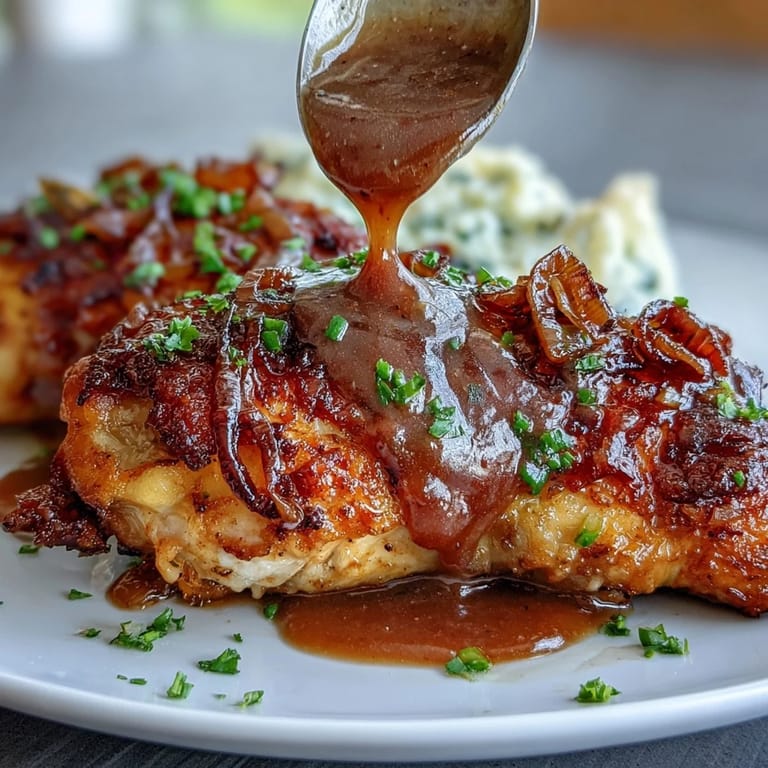
- Slowly pour in chicken broth while whisking constantly, scraping the bottom of the skillet with your whisk to loosen all those browned, flavorful bits stuck there. This takes patience—add too fast and you'll get lumps, so go slow and let the whisk do the work. Once smooth, add thyme, paprika, salt, pepper, and butter, then let it simmer for 2-3 minutes until thickened and glossy.
- Braise the chicken in the gravy:
- Nestle the golden chicken pieces into the gravy, spoon some gravy over the top, then cover and reduce heat to low. Simmer for 25-30 minutes until the chicken is completely cooked through and tender—it should reach 165°F/74°C on a meat thermometer at the thickest part without touching bone.
- Finish and serve:
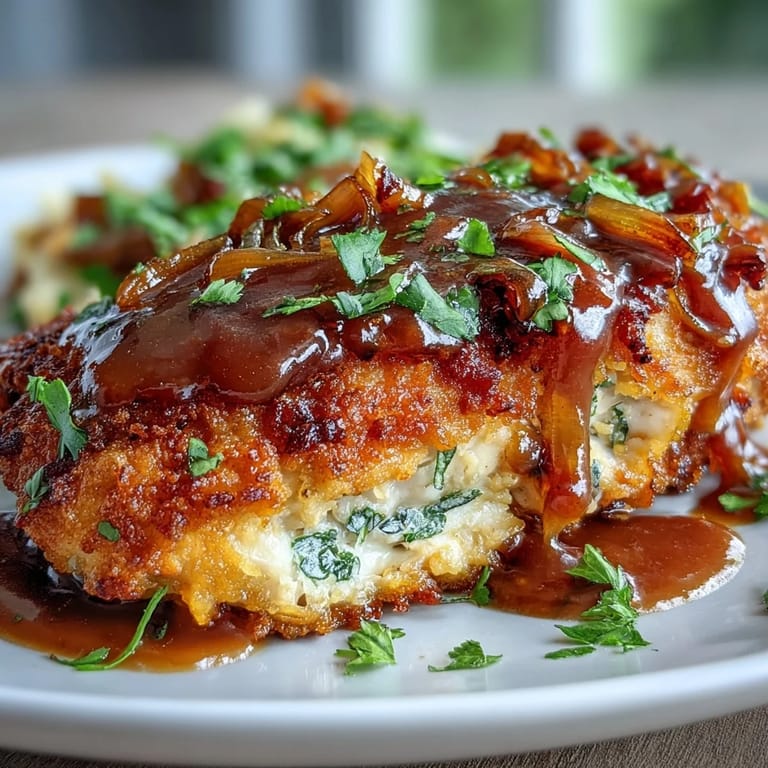
- Taste the gravy and adjust seasoning if needed—it might need a pinch more salt after all those minutes of simmering. Serve the chicken hot with plenty of gravy spooned generously over the top.
 Save to Pinterest
 There was this moment when my friend took her first bite, paused for what felt like forever, and then smiled in a way that made me understand why my grandmother guarded this recipe so carefully. It's not complicated, but it's honest—everything is exactly what it claims to be, and that simplicity is what makes it feel like home.
The Magic of Bone-In Chicken
Bone-in, skin-on chicken pieces are non-negotiable for this dish because they're engineered by nature to stay moist and flavorful through extended cooking. The bones conduct heat slowly and evenly, while the skin renders fat into the gravy and crisps up during frying—boneless chicken will always feel a little sad and dry by comparison. I learned this the hard way after trying to shortcuts with breasts, and the difference was so obvious I've never made that mistake again.
Why the Onions Matter More Than You Think
The onions aren't just a supporting player—they're the entire personality of this gravy. When you cook them slowly until they're deep golden and caramelized, their natural sugars break down into something complex and savory that no amount of broth or seasoning can replicate. I used to rush this step, thinking five minutes was enough, until my grandmother quietly pointed out that the onions needed time to surrender completely to the heat. Now I understand that the actual cooking time for the chicken is less important than the eight to ten minutes spent coaxing those onions into something magnificent.
Serving Suggestions and Final Thoughts
Serve this with mashed potatoes or fluffy white rice to catch every drop of gravy, or make collard greens on the side for an authentic Southern plate. You can also stretch it further by serving over buttered egg noodles, which soak up the gravy like little pillows. If you're starting with boneless, skinless chicken for dietary reasons, reduce the simmering time by about 10 minutes and expect a slightly different texture—still delicious, just not quite the same magic.
- Make extra gravy on purpose—people will ask for seconds and thirds, and any leftover gravy is glorious over toast the next morning.
- This dish actually improves after a day in the refrigerator, so don't hesitate to make it ahead and reheat gently with a splash of broth.
- Save your broth, onion scraps, and leftover chicken for an excellent soup base the following week.
 Save to Pinterest
 This is the kind of recipe that tastes like somebody cares about you, and honestly, that's the whole point. Make it when you need comfort, when you want to impress someone, or simply because a Tuesday night deserves something better than takeout.
Recipe Q&A
- → What type of chicken is best for smothering?
Bone-in, skin-on chicken thighs and drumsticks work best as they stay moist and tender during simmering.
- → How do I achieve a thick onion gravy?
Cook onions slowly until golden, then sprinkle flour and stir well before gradually whisking in chicken broth to thicken the sauce.
- → Can I substitute the spices in this dish?
Yes, you can adjust paprika, thyme, and garlic powder based on preference, but keep a balance to preserve the savory character.
- → What side dishes complement this dish well?
Mashed potatoes, rice, or collard greens enhance the meal by soaking up the flavorful gravy.
- → How do I know when the chicken is cooked through?
Simmer until the internal temperature reaches 165°F (74°C) and the meat is tender and easily pierced with a fork.