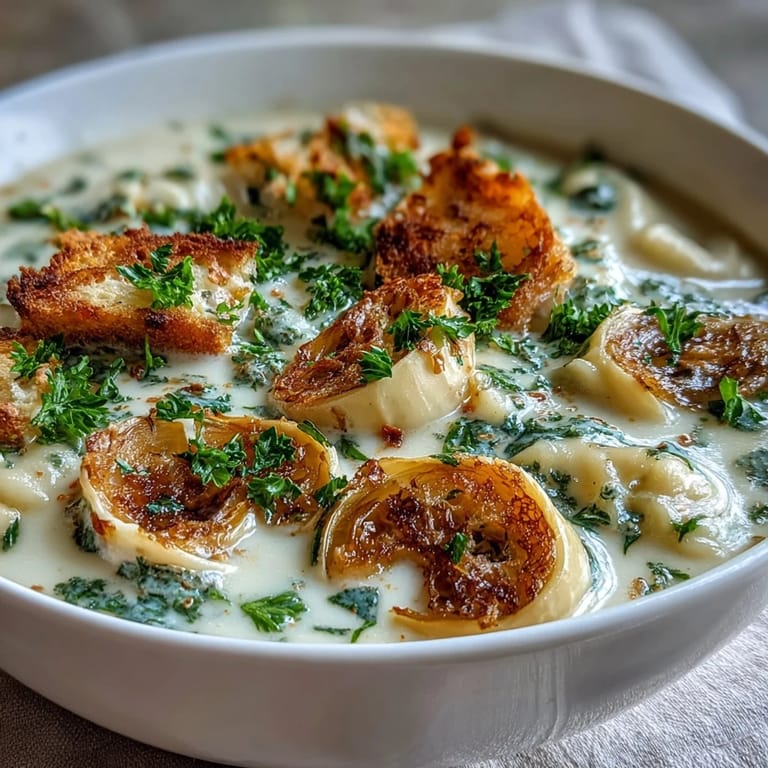
 Save to Pinterest
 My kitchen smelled like caramelized garlic for three days after I discovered this soup, and honestly, I wasn't complaining. A friend had left a half-dozen garlic heads on my counter after mentioning roasted garlic soup in passing, and I stood there wondering if she was hinting that I needed to eat better or just loved me enough to leave her groceries behind. Either way, that afternoon taught me that the sweetest, most forgiving soup starts with patience and an oven.
I made this for my neighbor during flu season, showing up unannounced with a thermos because she'd checked on my plants while I traveled. She opened the door looking exhausted, took one spoonful, and the whole mood shifted. It's rare when food does that, when a simple bowl of soup becomes an actual conversation between two people, a quiet thank you neither of us needed words for.
Ingredients
- Roasted garlic, 4 large heads: This is where the magic lives, and yes, you need four because roasting mellows them into pure sweetness and they nearly disappear into the soup's body.
- Olive oil, 2 tablespoons: Just enough to coat the garlic and help it caramelize into golden softness without drying out.
- Unsalted butter, 2 tablespoons: Creates a foundation for the onions and lets their flavor bloom without competing spices.
- Yellow onion, 1 medium, finely chopped: The backbone of the soup, sweet and mellow once it's translucent, which takes about five minutes of patient stirring.
- Russet potato, 1 large, peeled and diced: Gives the soup its velvety texture without needing cream, breaking down completely as it simmers.
- Low-sodium vegetable broth, 4 cups: Use low-sodium so you control the final salt level and taste the garlic clearly.
- Whole milk or plant-based milk, 1 cup: Added at the end to create richness without overpowering the roasted garlic's delicate sweetness.
- Dried thyme, 1/2 teaspoon: A whisper of herbal earthiness that knows when to step back and let the star ingredient shine.
- Bay leaf, 1: Simmers quietly in the background, then gets removed before blending so it doesn't bitter the final texture.
- Salt and freshly ground black pepper, to taste: Season at the end once you've tasted what the roasted garlic and broth already bring.
- Fresh parsley, 2 tablespoons chopped: A bright final touch that looks lovely and adds a living green note to something warm and pale.
Tired of Takeout? 🥡
Get 10 meals you can make faster than delivery arrives. Seriously.
One email. No spam. Unsubscribe anytime.
Instructions
- Roast your garlic until it's golden and soft:
- Preheat the oven to 400°F and slice just the tops off each garlic head to expose those cloves sitting underneath. Drizzle each one with olive oil like you're giving them a little spa treatment, wrap them loosely in foil, and slide them onto a baking sheet. After 35 to 40 minutes, they'll smell unbelievably good and the cloves will squeeze out of their papery skins like butter.
- Build your soup base with butter and onion:
- In a large pot over medium heat, melt the butter and add your finely chopped onion, stirring every minute or so until it turns translucent and soft, which takes about five minutes. You're not looking for color here, just tenderness and the beginning of caramelization.
- Add the potatoes, garlic, and broth:
- Throw in your diced potato, squeeze in all that roasted garlic from its skins, sprinkle the thyme over everything, add the bay leaf, and pour in the vegetable broth. Bring it to a boil, then immediately lower the heat and let it simmer gently for about 15 minutes until the potato pieces are so tender they break apart with a spoon.
- Blend until silky smooth:
- Fish out the bay leaf with a spoon, then use an immersion blender to purée everything until it's velvety and uniform, or carefully transfer batches to a regular blender if that's what you have. The soup should look almost pale beige and feel thick when you lift the blender out.
- Finish with milk and seasoning:
- Return the soup to the pot if you used a regular blender, stir in the milk slowly while heating gently so it doesn't scald, and taste it. Now season with salt and pepper, tasting as you go because the broth is already salty and you want to find the right balance.
- Serve warm with garnish:
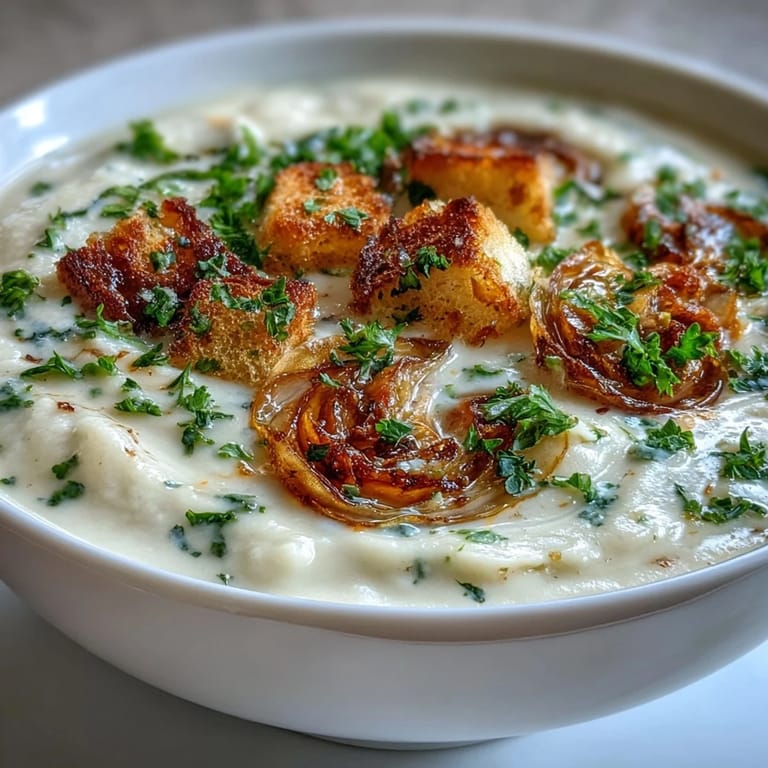
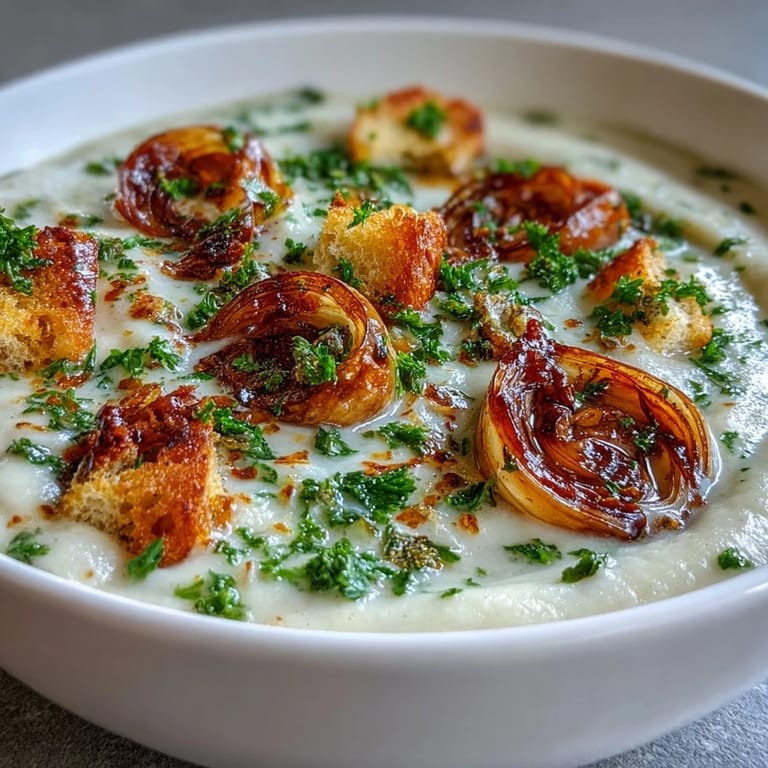
- Ladle into bowls and scatter chopped parsley across the top, maybe add some croutons or toasted bread if you want something to bite into alongside the soup.
 Save to Pinterest
 There's a moment when you first blend the soup and see it transform from chunky and humble into something that looks almost elegant that you realize how good simple food can be. I stood there with the immersion blender whirring, watching my kitchen smell and the soup in front of me become two different things entirely, and I understood why my neighbor had cried a little.
Why Roasted Garlic Changes Everything
Raw garlic bites and demands attention, but roasted garlic becomes almost sweet and gentle, almost nutty in a quiet way. When you roast garlic low and slow, the sugars caramelize and the sharp compounds mellow into something that feels like it's been simmering in wisdom. This soup lets you experience garlic as comfort instead of as the ingredient that makes your breath memorable at work the next day.
The Texture That Makes It Work
The potato does most of the heavy lifting here, breaking down completely as it simmers so the soup becomes naturally thick and velvety without needing heavy cream or cornstarch or any tricks. The blending step is where it all becomes silky, where separate ingredients blur into one unified thing that tastes more elegant than the sum of its parts. You end up with something that feels like you spent hours on it when you really only spent about an hour.
Variations and Adaptations
This soup is forgiving enough to bend a little depending on what you have and what you're craving. Sometimes I add a pinch of cayenne pepper at the end for a gentle heat that doesn't overpower the garlic, and sometimes I finish it with a drizzle of good olive oil right before serving. If you're vegan, swap the butter and milk for plant-based versions and the soup tastes equally good, maybe even better if you love that slight nuttiness of certain plant butters.
- A tiny pinch of cayenne adds warmth without making anyone cough into their bowl.
- Serve with crusty bread and you've got a meal that sticks with you for hours.
- Leftover roasted garlic cloves can be spread on toast or stirred into almost anything that needs richness.
 Save to Pinterest
 This soup asks so little of you and gives so much back, turning four cloves of garlic and a potato into something that feels like someone who loves you spent all afternoon cooking. That's the real magic here.
Recipe Q&A
- → How long does it take to roast garlic for soup?
Roast the garlic heads at 400°F for 35-40 minutes until the cloves are soft and golden brown. Let them cool slightly before squeezing out the tender roasted cloves.
- → Can I make this soup vegan?
Yes, simply substitute plant-based butter and your favorite unsweetened plant-based milk for the dairy versions. The soup will remain just as creamy and delicious.
- → What gives this soup its thick texture?
The diced potato naturally thickens the soup while blending. As the potato cooks and breaks down, it creates a velvety, smooth consistency without needing heavy cream or flour.
- → Can I freeze roasted garlic soup?
Absolutely. Let the soup cool completely, then store in airtight containers for up to 3 months. Thaw overnight in the refrigerator and reheat gently, adding a splash of milk if needed.
- → What goes well with roasted garlic soup?
Crusty bread, homemade croutons, or a simple green salad make excellent accompaniments. The soup also pairs beautifully with grilled cheese sandwiches for a classic comforting meal.
- → How do I know when the garlic is properly roasted?
The garlic heads should feel soft when squeezed, and the exposed cloves should be golden brown and caramelized. They should easily squeeze out of their skins like a paste.