 Save to Pinterest
 In the heart of Korean cuisine lies a dish that perfectly balances bold flavors, vibrant colors, and satisfying textures: the Korean Beef Bowl. This beloved comfort food transforms simple ingredients into an explosion of taste that warms both body and soul. The aromatic blend of ginger and garlic mingling with the distinctive sweet-spicy notes of gochujang creates a symphony of flavors that dance across your palate with each bite.
Save to Pinterest Korean beef bowls, or Bibimbap-inspired dishes, have roots in centuries-old traditions where families would combine leftover vegetables with rice and meat. The modern interpretation we're sharing today preserves those essential flavor elements while streamlining the process for busy home cooks. The quick-pickled vegetables bring brightness and crunch, while the gochujang-seasoned beef delivers deep umami satisfaction.
- For the Beef: 1 lb (450 g) lean ground beef, 2 tbsp vegetable oil, 3 cloves garlic (minced), 1 tbsp fresh ginger (grated), 3 tbsp gochujang (Korean chili paste), 2 tbsp soy sauce, 1 tbsp brown sugar, 1 tbsp rice vinegar, 1 tsp toasted sesame oil, 2 green onions (thinly sliced)
- For the Pickled Vegetables: 1/2 cup (60 g) carrot (julienned), 1/2 cup (60 g) daikon radish (julienned), 1/2 cup (120 ml) rice vinegar, 1 tbsp sugar, 1/2 tsp salt
- For Serving: 4 cups cooked white rice (or brown rice), 1 cup cucumber (thinly sliced), 1/2 cup radish (thinly sliced), 1 cup kimchi (chopped), 1 tbsp toasted sesame seeds
Tired of Takeout? 🥡
Get 10 meals you can make faster than delivery arrives. Seriously.
One email. No spam. Unsubscribe anytime.
- Prepare the Pickled Vegetables
- In a small bowl, combine the rice vinegar, sugar, and salt. Stir until dissolved. Add the carrot and daikon radish. Mix well and set aside to pickle while you prepare the rest of the dish.
- Cook the Beef
- Heat vegetable oil in a large skillet over medium-high heat. Add garlic and ginger, sauté for 1 minute until fragrant. Add ground beef and cook, breaking it up with a spoon, until browned and cooked through (about 5–6 minutes). Drain excess fat if needed.
- Season the Beef
- Stir in the gochujang, soy sauce, brown sugar, rice vinegar, and sesame oil. Cook for another 2–3 minutes, allowing the sauce to thicken and coat the beef. Remove from heat and stir in half the green onions.
- Assemble the Bowls
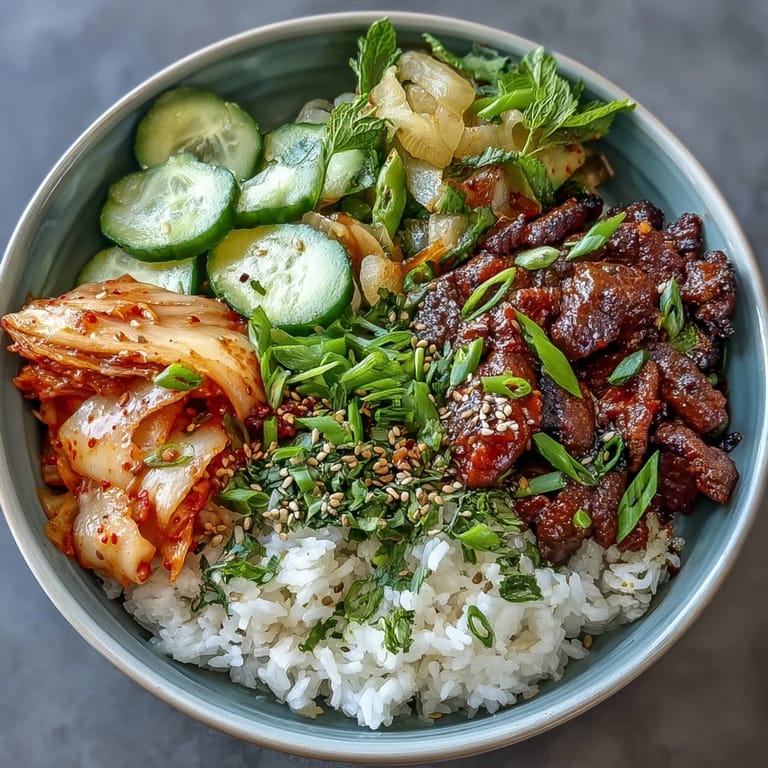
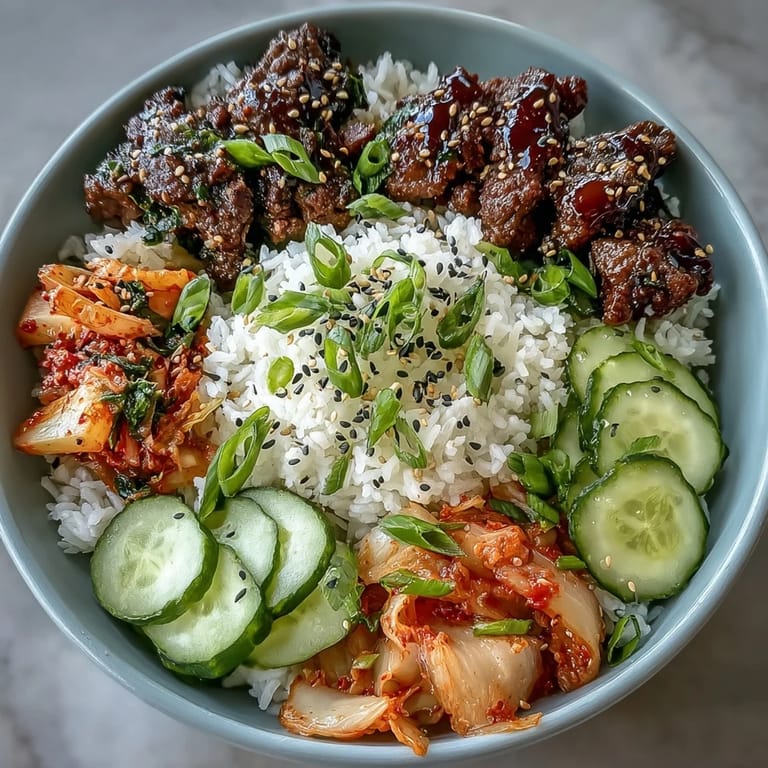
- Divide the cooked rice among 4 bowls. Top each with a generous portion of the beef mixture. Arrange pickled vegetables, cucumber, radish, and kimchi around the beef. Garnish with remaining green onions and toasted sesame seeds.
- Serve
- Serve immediately while hot.
Für das perfekte koreanische Beef Bowl ist die Vorbereitung entscheidend. Schneiden Sie alle Gemüsesorten vor dem Kochen, um den Prozess zu beschleunigen. Die eingelegten Gemüse können auch am Vortag zubereitet werden - sie entwickeln über Nacht sogar noch mehr Geschmack. Achten Sie beim Anbraten des Rindfleisches darauf, es gut zu zerkleinern, damit die Sauce gleichmäßig einziehen kann.
Das Korean Beef Bowl lässt sich wunderbar an verschiedene Ernährungsbedürfnisse anpassen. Für eine kohlenhydratarme Version ersetzen Sie den Reis durch Blumenkohlreis. Vegetarier können statt Rindfleisch zerkleinerte Pilze oder zerbröselten Tofu verwenden und mit denselben Gewürzen zubereiten. Mögen Sie es schärfer? Fügen Sie einfach mehr Gochujang oder frische, gehackte Chilischoten hinzu.
Servieren Sie Ihr Korean Beef Bowl in einer tiefen Schüssel, wobei Sie den Reis als Basis verwenden und die anderen Komponenten darauf anrichten. Ein rohes Ei in der Mitte ist eine traditionelle Ergänzung, die durch die Resthitze leicht angaren kann. Reichen Sie dazu zusätzliche Sesamsamen, Frühlingszwiebeln und eventuell etwas Gochujang-Sauce zum individuellen Nachwürzen.
 Save to Pinterest
 As you take your first bite of this Korean Beef Bowl, notice how the spicy-sweet beef contrasts with the tangy pickled vegetables and the subtle heat of kimchi. Each component plays an important role in creating a balanced, satisfying meal that represents the heart of Korean cooking philosophy - where texture, color, and flavor work in perfect harmony. Whether you're new to Korean cuisine or a seasoned enthusiast, this bowl offers a delicious gateway to the rich culinary traditions of Korea.
Recipe Q&A
- → What type of beef works best for this bowl?
Lean ground beef is ideal as it cooks quickly and absorbs the rich spicy sauce well, providing a satisfying texture.
- → How are the pickled vegetables prepared?
Carrot and daikon are julienned then marinated in a mixture of rice vinegar, sugar, and salt for a quick, tangy pickle that adds crunch and brightness.
- → Can I substitute the gochujang sauce?
Gochujang delivers unique heat and depth, but you can use chili paste or a spicy soy-based sauce to taste if unavailable.
- → What rice types complement this dish?
Steamed white or brown rice serves as a neutral base that balances the bold flavors and absorbs the spicy beef sauce well.
- → How do the garnishes enhance the dish?
Fresh green onions and toasted sesame seeds add aroma and subtle crunch, while kimchi brings a spicy, fermented tang.
- → Is this dish suitable for gluten-free diets?
Yes, by using tamari sauce instead of soy sauce and ensuring gluten-free gochujang, this bowl can be made gluten-free.