 Save to Pinterest
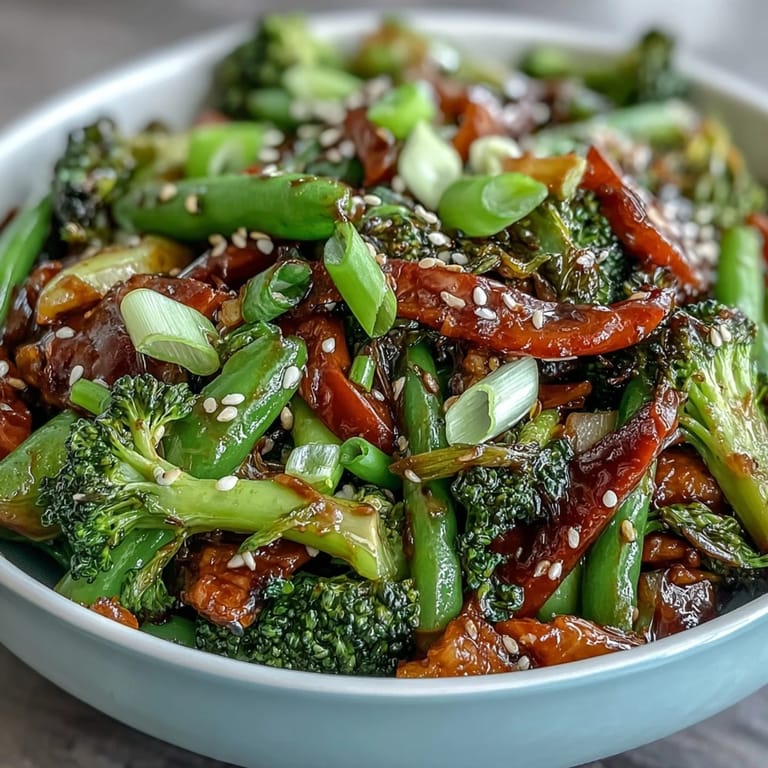
 There's something about the sound of vegetables hitting a hot wok that makes you feel like you're actually cooking something worthwhile. One weeknight, I threw together whatever was languishing in my crisper drawer with some ginger and soy sauce, and suddenly dinner felt less like an obligation and more like something worth savoring. The kitchen filled with this warm, peppery steam that made me pause mid-chop just to breathe it in. That's when I realized stir-fries aren't just about speed, though they're certainly fast—they're about respecting simple ingredients and letting them shine.
I made this for my neighbor who'd mentioned being too tired to cook, and watching her face light up at the smell alone told me everything. She came back three days later asking for the recipe because apparently her partner loved it so much he actually volunteered to do the dishes. There's something quietly powerful about feeding people food that tastes like you care but doesn't require hours in the kitchen.
Ingredients
- Broccoli florets (1 cup): Keep them roughly the same size so they cook evenly; smaller florets get a bit more caramelized at the edges, which honestly isn't the worst thing.
- Sliced carrots (1 cup): Slice them on a slight bias to increase surface area and help them cook faster—this small detail makes them tender-crisp instead of woody.
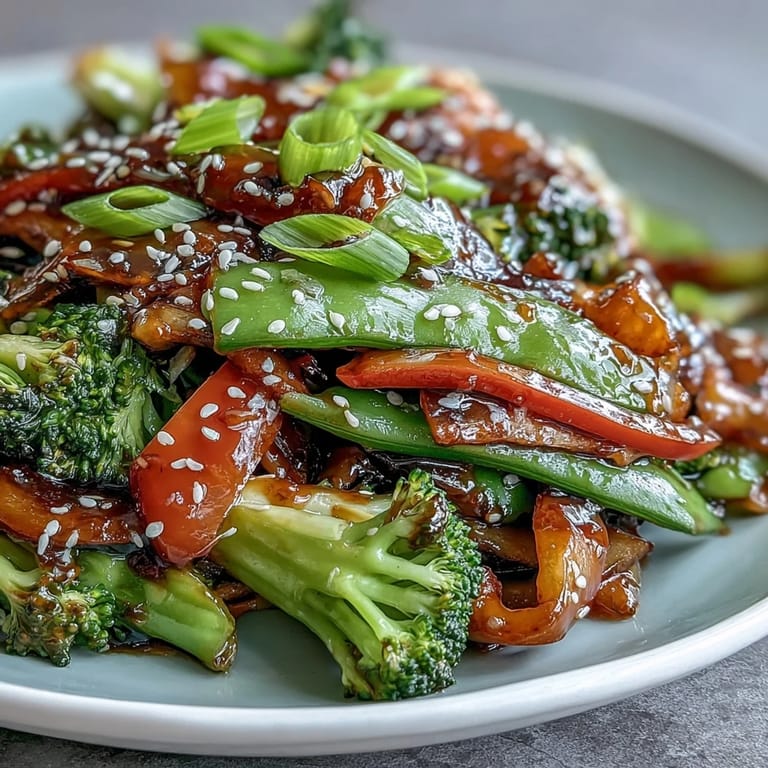
- Red bell pepper, sliced: The sweetness balances the salty-savory sauce, and the color makes the whole dish feel alive on the plate.
- Snap peas, trimmed (1 cup): Add these halfway through cooking to preserve their snap; they're the vegetables that remind you why you wanted crispy in the first place.
- Yellow onion, thinly sliced: Thin slices mean they soften without disappearing, adding sweetness without overpowering anything else.
- Sliced mushrooms (1 cup): They act like little flavor sponges, soaking up all that ginger-soy goodness while adding an earthy depth.
- Fresh ginger, finely grated (2 tablespoons): Grate it fresh right before cooking—bottled ginger tastes tired by comparison, and this dish deserves the real thing.
- Garlic, minced (3 cloves): Mince it fine so it distributes evenly and becomes almost invisible while making everything taste like itself, just better.
- Soy sauce (3 tablespoons): Use tamari if gluten matters to you; the flavor is slightly rounder and gentler without tasting different enough to notice.
- Sesame oil (1 tablespoon): This is accent seasoning, not cooking oil—a little goes so far that people sometimes think you've added something else entirely.
- Vegetable oil (1 tablespoon): Helps sesame oil spread and prevents it from burning, keeping that toasted flavor intact.
- Rice vinegar (1 tablespoon): Brightens everything without making it taste acidic, adding dimension that balances the salty-sweet sauce.
- Maple syrup or honey (1 teaspoon): Just enough sweetness to round out the flavors without making anyone think you're trying to make dessert.
- Crushed red pepper flakes (1/4 teaspoon, optional): Leave this out if heat isn't your thing, but even a tiny pinch adds a whisper of warmth that makes people wonder what you did differently.
- Green onions, sliced: These are your final flourish, adding a fresh bite right at the end that prevents the whole dish from feeling heavy.
- Toasted sesame seeds (1 tablespoon): Toast your own if you have time—the difference between pre-toasted and freshly toasted is surprisingly worth it.
Tired of Takeout? 🥡
Get 10 meals you can make faster than delivery arrives. Seriously.
One email. No spam. Unsubscribe anytime.
Instructions
- Make the sauce first:
- Whisk soy sauce, rice vinegar, maple syrup, and red pepper flakes together in a small bowl, then step back and let it sit. This gives the flavors a moment to become friends before they meet your vegetables.
- Get your oil shimmering:
- Heat vegetable oil and sesame oil in your skillet or wok over medium-high heat until the surface ripples slightly and the smell hits you. This is the moment everything changes from cold ingredients to alive cooking.
- Wake up the aromatics:
- Add ginger and garlic, stirring constantly for about 30 seconds—you'll know it's ready when your kitchen smells like someone's grandmother is cooking somewhere nearby. Don't let it sit still or it'll brown instead of perfume.
- Start with the slow vegetables:
- Toss in onion, carrots, and broccoli, stirring almost constantly for 2 to 3 minutes. You're looking for the carrots to soften just slightly at the edges while staying firm in the middle.
- Add the quick-cooking vegetables:
- Introduce bell pepper, snap peas, and mushrooms, then keep stirring for another 3 to 4 minutes until everything looks crisp-tender and bright. This is where you get to taste one piece and adjust your thinking about whether you nailed it or need more time.
- Pour in the sauce and finish:
- Add your prepared sauce, tossing everything constantly for 1 to 2 minutes so every piece gets coated. The heat will pull all those flavors together into something cohesive and fragrant.
- Garnish and serve:
- Remove from heat, scatter green onions and sesame seeds over the top, and serve immediately over rice or noodles. The freshness of those green onions is your reward for not overcooking anything.
 Save to Pinterest
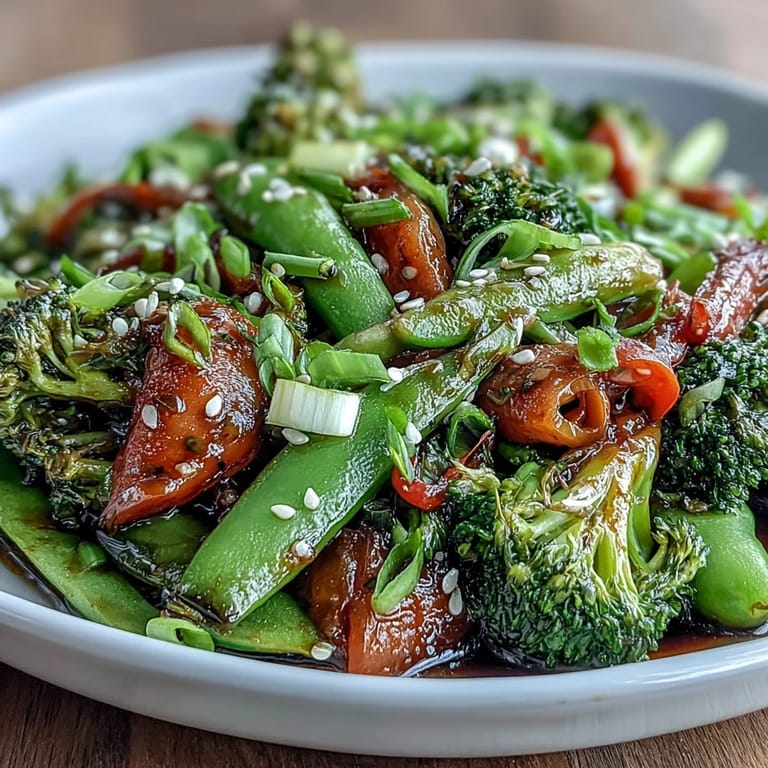
 My sister brought her teenage daughter over once, and I made this thinking they'd politely eat it on their way to something else. Instead, the kid asked for seconds and wanted to know why restaurant stir-fries never tasted this good. Turned out she'd been convinced she hated vegetables, but something about them being actually crispy and flavored all the way through changed her mind.
Timing Your Stir-Fry
The trick nobody tells you is that stir-frying is less about following a timer and more about watching vegetables transform. Dense vegetables like carrots and broccoli need more time than snap peas, so the order matters. Cooking teaches you that the same vegetable at different thicknesses can change everything—thin carrot slices cook in half the time of thick ones, which sounds obvious until you're standing in front of a hot wok realizing half your ingredients are ready while the other half are still crunchy.
Ginger as Your Secret Weapon
Fresh ginger does something unexpected here—it doesn't just add flavor, it adds a feeling. The warmth it brings is almost cozy, which seems strange to say about a quick weeknight dinner, but it changes the experience from eating something healthy to eating something you actually wanted. I learned this the hard way when I once substituted ground ginger, thinking it would be fine, and ended up with something that tasted dusty instead of alive.
Making It Your Own
The beauty of stir-fries is that they're forgiving enough to accommodate what's actually in your kitchen. I've made this with bok choy instead of broccoli, added cauliflower when carrots were running low, and once even threw in some water chestnuts because I was feeling adventurous. The fundamentals stay the same—hot pan, good oil, vegetables that cook at roughly the same speed, and a sauce that ties everything together—but the specifics can bend.
- Add tofu or tempeh if you want more protein and substance without changing the vibe.
- Use tamari instead of soy sauce if gluten is something you need to avoid.
- Serve over jasmine rice, brown rice, or noodles depending on what you have and what sounds good that day.
 Save to Pinterest
 This recipe has become my go-to when I want to cook something real but don't have the energy for anything complicated. It's the kind of meal that makes you feel capable, even on nights when you're running on empty.
Recipe Q&A
- → Can I make this stir-fry gluten-free?
Absolutely. Simply replace regular soy sauce with tamari, which provides the same savory flavor without gluten. All other ingredients naturally contain no gluten.
- → What other vegetables work well in this dish?
This stir-fry is highly adaptable. Try adding baby corn, water chestnuts, bok choy, zucchini, snow peas, or baby spinach. The key is to add vegetables in order of cooking time, starting with harder ones like carrots and ending with delicate greens.
- → How can I add more protein to make it a complete meal?
Crispy tofu cubes, tempeh strips, or edamame make excellent plant-based protein additions. You could also add cooked chickpeas or cashews during the last minute of cooking for extra protein and texture.
- → Can I meal prep this ginger stir-fry?
Yes, though vegetables are best when freshly stir-fried. For meal prep, cook the vegetables slightly less than desired and store in airtight containers. Reheat in a hot skillet for 2-3 minutes to restore crispness. Store sauce separately and add when reheating.
- → What's the best way to slice vegetables for even cooking?
Cut all vegetables into uniform, bite-sized pieces. Slice carrots and peppers into thin strips, cut broccoli into small florets, and trim snap peas to similar lengths. This ensures everything cooks evenly in the hot wok.