 Save to Pinterest
 My neighbor Rosa once dropped off a Tupperware of this pasta after I'd mentioned feeling stuck in a dinner rut. The combination sounded odd on paper, but one bite completely reset my understanding of how sweet and savory could dance together. She'd learned it from her aunt in Sicily, where they'd toss whatever was abundant into a pan and call it genius. I've been making my own version ever since, tweaking the ratio of raisins to anchovies until it felt just right. It's become my go-to whenever I want something that feels both comforting and a little unexpected.
I made this for a group of friends who claimed they hated anchovies, and not one of them guessed the secret ingredient. They kept asking what made it taste so rich and complex, and I just smiled and passed the bowl around again. One friend even scraped the pan clean with a piece of bread, which is the highest compliment in my book. That night proved to me that this dish has a way of winning people over before they even know what they're eating. It's humble but surprisingly powerful, the kind of recipe that makes you look like you know what you're doing.
Ingredients
- Whole wheat spaghetti: The nutty flavor holds up beautifully against the bold ingredients, and it doesn't turn mushy if you let it sit for a minute.
- Cauliflower: Roasting it instead of boiling transforms it into something sweet and almost nutty, with edges that crisp up like little flavor bombs.
- Garlic: Slicing it thin lets it soften and sweeten in the oil without burning, which can turn bitter fast.
- Red chili: Just a small one adds warmth without overwhelming the dish, but you can skip it if heat isn't your thing.
- Flat-leaf parsley: The fresh, grassy bite at the end brightens everything and keeps it from feeling too heavy.
- Anchovy fillets: They dissolve into the oil and create this umami-rich base that makes the whole dish sing.
- Raisins: Their natural sweetness balances the salty anchovies and adds little bursts of surprise in every forkful.
- Capers: Chopped up, they distribute their briny punch evenly and keep things lively.
- Lemon zest: A bit of brightness right at the end wakes up all the other flavors without adding liquid.
- Extra virgin olive oil: Use the good stuff here, it's the medium that carries all these flavors together.
Tired of Takeout? 🥡
Get 10 meals you can make faster than delivery arrives. Seriously.
One email. No spam. Unsubscribe anytime.
Instructions
- Roast the cauliflower:
- Toss the florets with olive oil, salt, and pepper, then spread them out on a baking sheet so they have room to breathe. Roast at 220°C (425°F) for 18-20 minutes, flipping halfway, until they're golden and tender with crispy edges.
- Cook the pasta:
- Boil a big pot of salted water and cook the spaghetti until it's al dente, with just a little bite left in the center. Scoop out half a cup of the starchy pasta water before you drain it, you'll need that later.
- Build the base:
- Heat the remaining olive oil in a large skillet over medium heat, then add the garlic and chili, stirring for about a minute until they smell amazing. Toss in the anchovies and capers, breaking up the anchovies with your spoon until they melt into the oil.
- Combine everything:
- Add the raisins and roasted cauliflower to the skillet, tossing gently so nothing breaks apart. Stir in the drained spaghetti and a splash of that reserved pasta water, mixing until everything is coated and heated through.
- Finish and serve:
- Take the pan off the heat and stir in the lemon zest and chopped parsley, tasting and adjusting the salt and pepper. Serve it right away, maybe with a little extra parsley and a drizzle of olive oil on top.
 Save to Pinterest
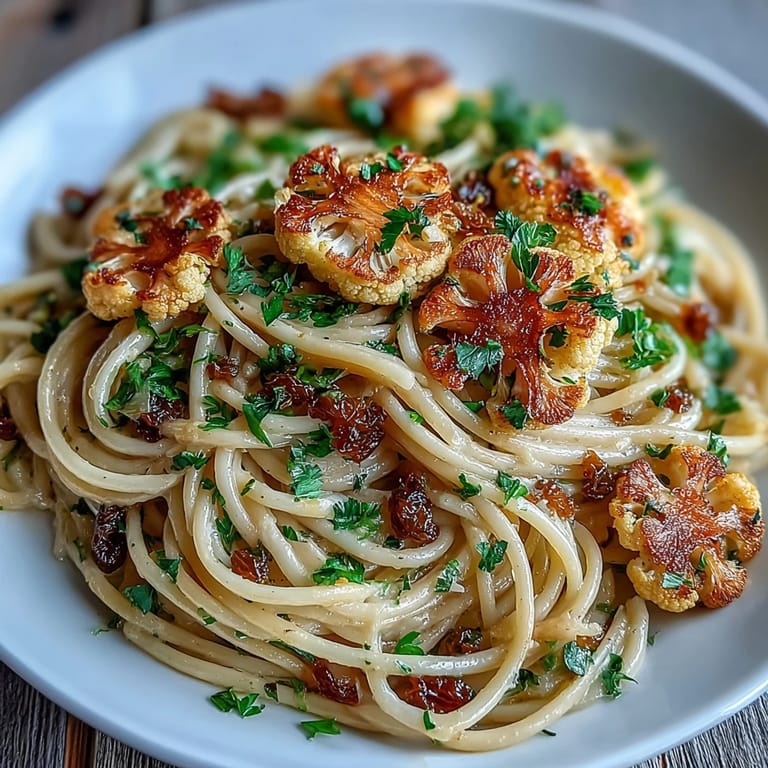
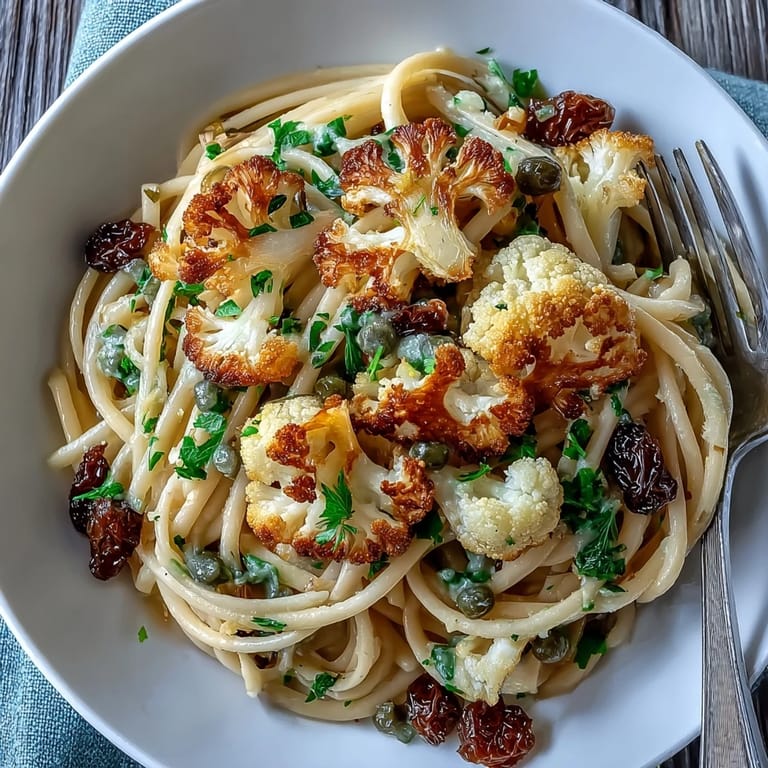
 There's a moment when you toss the spaghetti into the skillet and everything comes together, the smell of garlic and lemon, the little pops of sweetness from the raisins, the way the pasta glistens with oil. That's when this stops being a list of ingredients and becomes dinner, something that feels generous and alive. I've served this on quiet weeknights and at casual dinners with friends, and it always feels like more than the sum of its parts. It's the kind of dish that reminds you why cooking at home is worth it.
Choosing Your Pasta
Whole wheat spaghetti adds a hearty, nutty backbone that complements the roasted cauliflower, but regular spaghetti works just as well if that's what you have. I've also tried this with bucatini, and the thick, hollow strands catch the little bits of raisin and caper beautifully. If you're going gluten-free, look for a brand that holds its shape, some fall apart too easily and turn the dish mushy. The key is cooking it just to al dente so it can finish in the skillet without getting soft.
Getting the Most from Anchovies
Anchovies can be intimidating if you've only ever had them on pizza, but in this dish they melt into the oil and become pure savory magic. I drain them well and chop them up before adding them to the pan, which helps them dissolve faster and distribute evenly. If you're nervous about the fishy flavor, start with four fillets instead of six and taste as you go. Once they've melted, you won't taste fish, just a deep, salty richness that makes everything else taste better.
Make-Ahead and Storage Tips
This dish is best eaten fresh, right out of the pan when the pasta is still glossy and the cauliflower has that roasted crunch. If you do have leftovers, store them in an airtight container in the fridge for up to two days, but know that the texture won't be quite the same. I like to reheat it in a skillet with a splash of water or olive oil to bring back some life, and sometimes I'll add a handful of fresh arugula to brighten it up. You can roast the cauliflower ahead of time and keep it in the fridge, which cuts down on cooking time during the week.
- Store leftovers in the fridge for up to two days and reheat gently with a bit of olive oil.
- Roast the cauliflower in advance and refrigerate it to save time on busy nights.
- Toss in fresh greens like arugula or spinach when reheating to add color and a peppery bite.
 Save to Pinterest
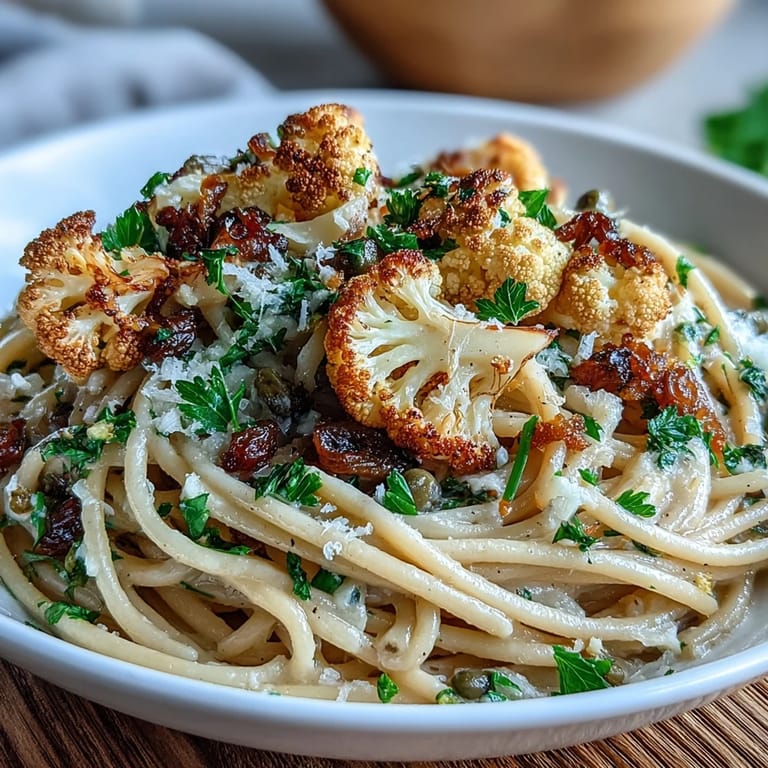
 This is the kind of pasta that surprises people and then sticks with them, the kind they ask you to make again. It's proof that a few simple ingredients, treated with a little care and heat, can turn into something you'll crave on a random Tuesday night.
Recipe Q&A
- → Can I substitute the anchovies in this dish?
While anchovies provide essential umami depth, you can substitute with 1-2 teaspoons of anchovy paste or use chopped olives and a splash of soy sauce for a similar savory profile, though the flavor will differ.
- → How do I prevent the cauliflower from becoming mushy?
Cut the florets into uniform sizes and roast at high heat (220°C/425°F) without overcrowding the baking sheet. Turn once halfway through for even caramelization and maintain texture.
- → Can I make this ahead of time?
This dish is best served immediately for optimal texture. However, you can roast the cauliflower up to 1 day ahead and store refrigerated. Reheat gently before combining with freshly cooked pasta.
- → What type of raisins work best?
Both regular dark raisins and golden raisins work well. Golden raisins offer a slightly milder, more delicate sweetness, while dark raisins provide deeper flavor. Currants are also an excellent alternative.
- → How can I add more protein to this meal?
Add grilled shrimp, pan-seared scallops, or flaked tuna during the final tossing step. You can also increase the anchovy fillets to 8-10 for a more pronounced flavor and added protein.
- → What wine pairs best with this dish?
A crisp, dry white wine like Verdicchio, Pinot Grigio, or Sauvignon Blanc complements the savory anchovies and balances the sweetness of the raisins beautifully.